
About Us
About HOPE
We have been actively working for nearly 25 years, during which we have built a strong and extensive network of both staff and local villagers. This well-established network enables us to efficiently mobilize and implement our extension activities in rural areas. Our organization is committed to engaging rural youth in employment opportunities through agriculture and allied sectors within their local communities. We focus on value addition in agriculture and horticulture, the promotion of small-scale industries, and enhancing the value chain of ringal-based products.
Our key initiatives include the promotion of ringal crafts, cultivation of low-cost millets and oilseeds, and various other socio-economic and income-generating activities. Over the past 25 years, we have successfully implemented more than 16 projects funded by DST, DBT, and other government agencies, with a total of over 40 projects completed under the banner of HOPE.
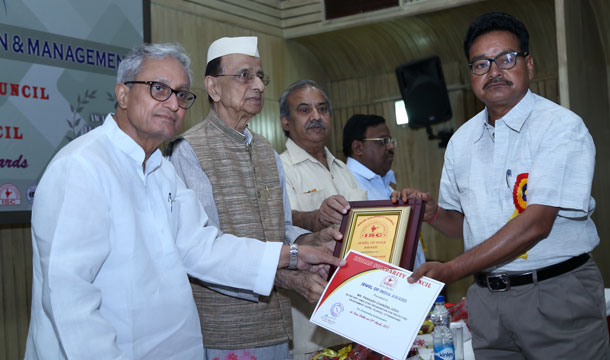
“ The jwel of India” award won by Mr. Prakash Chandra Joshi in year of 2017”
WHO WE ARE
Our Mision
1. To increase in family income
2. Increased availability of resources (natural and/or physical) and assets
3. To increase the No. of beneficiaries using facilities created under the different Govt/ Non-
Govt. projects
4. To increase in livelihood/ employment opportunities
5. Diversification of livelihood activities with description
6. Improved linkages with banking/ financing institutions
7. Improved linkages with Distt. Authorities/State Govt/ PRIs
8. To increases in No. of SHGs/technology user groups/cooperatives and/or enterprises formed
9. To improve linkages with market/ enterprises
10. Improved access to energy sources
11. No. of skilled/non skilled workers trained
12. No. of new technologies/products/processes/ services developed/adapted
13. Adoption of newly developed product indicated by number of adopters
14. To increase in No. of organizations motivated and mobilized for replication of project
achievements
Our Vision
Through a process of self-assessment, the organization has observed that the implementation of various projects has not only strengthened its institutional capacity but also made a significant positive impact across different segments of society. The core mission of the organization is to enhance the livelihood opportunities for the rural poor and to offer more viable and sustainable means of income. HOPE is particularly focused on initiatives aimed at the empowerment and advancement of rural women.
The organization has successfully established a sustainable development model in the project villages. Various income-generating activities are conducted throughout the year, resulting in increased earnings and growing self-reliance among the beneficiaries. Rural women’s groups, in particular, have demonstrated remarkable interest in savings practices and have also become more informed about various social issues. Programs focused on women’s empowerment, legal literacy, income generation, and vocational training have had a meaningful and transformative impact on their lives.
HOPE is committed to the holistic and sustainable development of rural hill communities by integrating modern technological interventions through its various projects. The organization, along with its dedicated team, remains steadfast in its commitment to extend unwavering support and collaboration for the continued development of this Himalayan region.
Himalayan Organis For Protecting Environment
Reg.No. (64)09 May 1992
FCRA. 136770023
History Of HOPE
Initially, I joined the NGO HESCO (Himalayan Environmental Studies and Conservation Organisation) in 1986 with the intent to contribute to the welfare of rural communities. After gaining five years of valuable experience at HESCO, I began working in the surrounding areas of Ranikhet and went on to establish my own NGO—HOPE (Himalayan Organization for Protecting Environment)—in 1991. Since then, our organization has been dedicated to serving farming and rural communities in the Himalayan region.
We also manage a school named “Pandit Govind Ballabh Joshi Junior High School” in Pilkholi (Ranikhet), offering education from Class 1 to 8. In addition to formal academics, the school provides skill-based education on modern agricultural practices, hygiene and sanitation, social values, and community ethics.
With over 27 years of continuous work in the hilly regions of Kumaon, we possess in-depth knowledge of the geography, culture, and livelihood systems of the area. We have developed a strong and experienced workforce that is deeply familiar with rural dynamics and capable of communicating effectively in the Kumaoni language.
HOPE Activity

Hill agriculture is entirely different from plain agriculture due to climate, topography, small and scattered land holding, rain fed agriculture, unawareness about improved agriculture technologies etc.
GALLERY


Hope Copyright© 2017- .